
Packing is part of the buying decision
In dried herbs, packing is not a small operational detail. It affects freight density, warehouse handling, receiving inspection, repacking cost, and how much product breakage the buyer can tolerate.
For Turkish bay leaves, many commercial discussions start with quality grade and price. Packing should be discussed just as early.
Common packing formats
Pressed bales
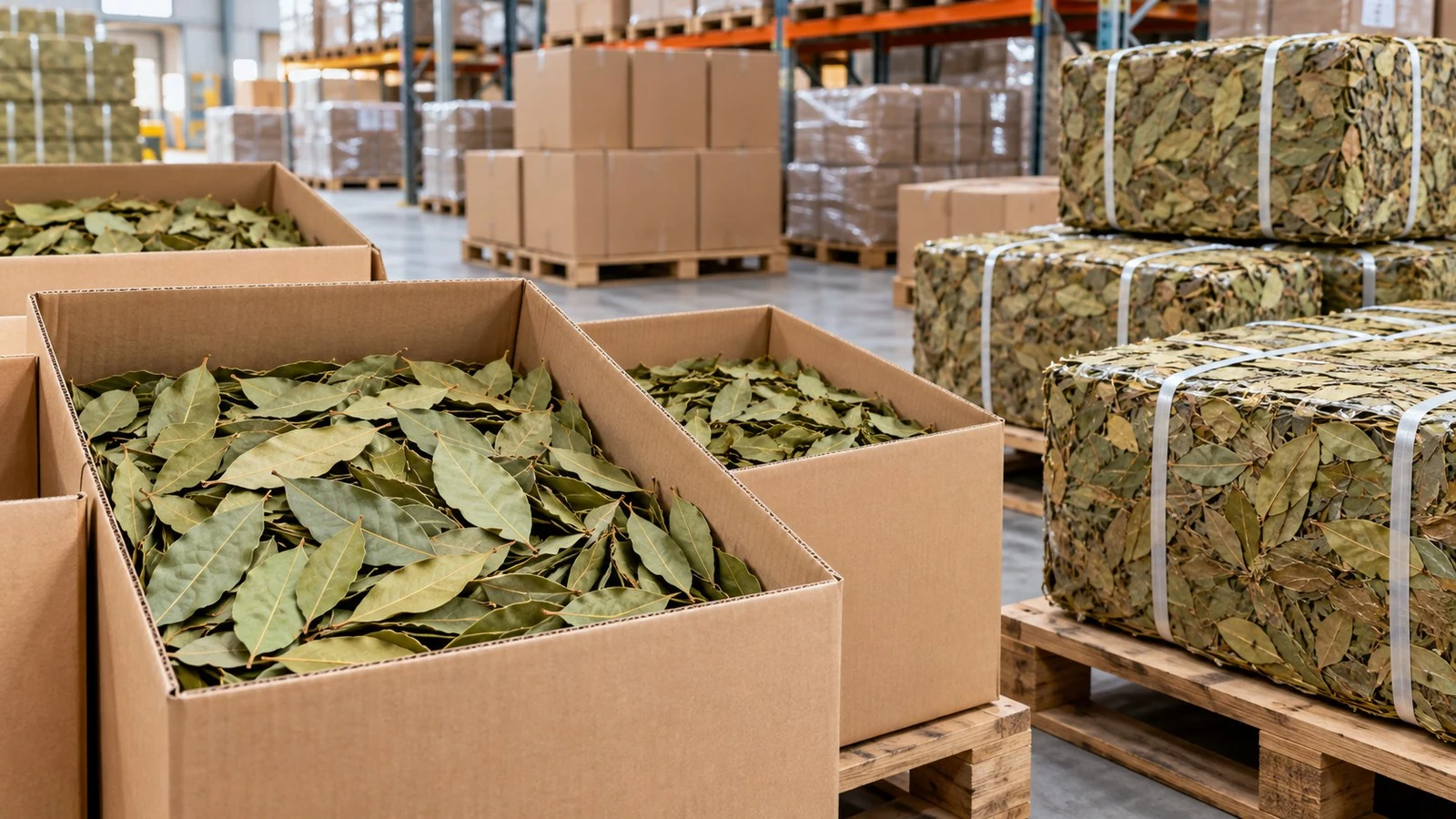
Pressed bales are used when buyers want efficient bulk movement and can handle repacking or further processing after arrival. Bay Leaves Co. presents 25 kg and 50 kg pressed bale options for Turkish bay leaves.
This format can be useful for importers, processors, and distributors with suitable warehouse handling. It may not be ideal for every buyer, especially if the next step requires small-format retail packing without additional processing.
Carton packing
Carton packing, such as 10 kg carton boxes, can support cleaner warehouse handling and easier picking for buyers who distribute to foodservice, specialty, or repacking customers.
Cartons can also be easier for receiving teams to count and sample. The tradeoff is that landed cost and pallet efficiency should be checked against the buyer's volume and route.
Buyer-specific packing
Buyer-specific packing may be possible by RFQ. This can include different carton counts, private-label planning, or packing instructions that fit the buyer's warehouse and sales channel.
The key is to decide what is operationally necessary rather than adding complexity without a commercial reason.
Questions to answer before choosing packing
Commercial buyers should answer these questions before requesting a quote:
- Will the bay leaves be sold as whole leaves, repacked, blended, or processed?
- Does the warehouse prefer bales, cartons, or palletized cartons?
- What is the acceptable broken leaf ratio after transport and handling?
- Is the shipment for a single destination or multiple distribution points?
- Are there labelling, lot coding, or private-label requirements?
- Which documents are needed by the importer, broker, or receiving warehouse?
Packing and grade should match
A premium whole-leaf program should not be planned only around freight efficiency. If the final product is sold in retail jars or pouches, leaf appearance after transport matters.
For industrial or blending use, the buyer may have more flexibility. In that case, the procurement team can compare total landed cost, handling efficiency, and document scope without overpaying for unnecessary visual sorting.
Do not leave private-label planning to the end
Private-label spice programs often involve artwork, barcode, carton marks, pallet instructions, and receiving rules. These details should be discussed before the supplier quotes production timing.
If the buyer first requests a generic bulk quote and later adds private-label requirements, lead time and cost may change.
A practical RFQ structure
A clean packing RFQ can be short:
- Product: Turkish bay leaves, whole dried.
- Intended channel: retail, foodservice, blending, or industrial.
- Preferred packing: 25 kg bale, 50 kg bale, 10 kg carton, or buyer-specific format.
- Destination: country, port, warehouse city, or delivery term.
- First order quantity and estimated annual volume.
- Required documents and any labelling requirements.
This keeps the discussion practical and reduces the chance of comparing offers that are not actually equivalent.
FAQ
Is carton packing always better than pressed bales?
No. Cartons can be easier to handle, but pressed bales may be more efficient for some bulk importers and processors.
Can packing affect broken leaf percentage?
Yes. Handling, compression, and transport can affect appearance. Buyers should match packing to the final channel and acceptable tolerance.
Should private-label details be included in the first RFQ?
Yes. Private-label requirements can change cost, timing, and workflow, so they should be visible from the beginning.
Are packing options fixed for every order?
No. Packing is quoted per product, volume, destination, and buyer requirement. Final options should be confirmed during the RFQ process.
For related pages, see Bay Leaves, Sourcing from Turkey, and Contact.