
Why grade language matters before a quote
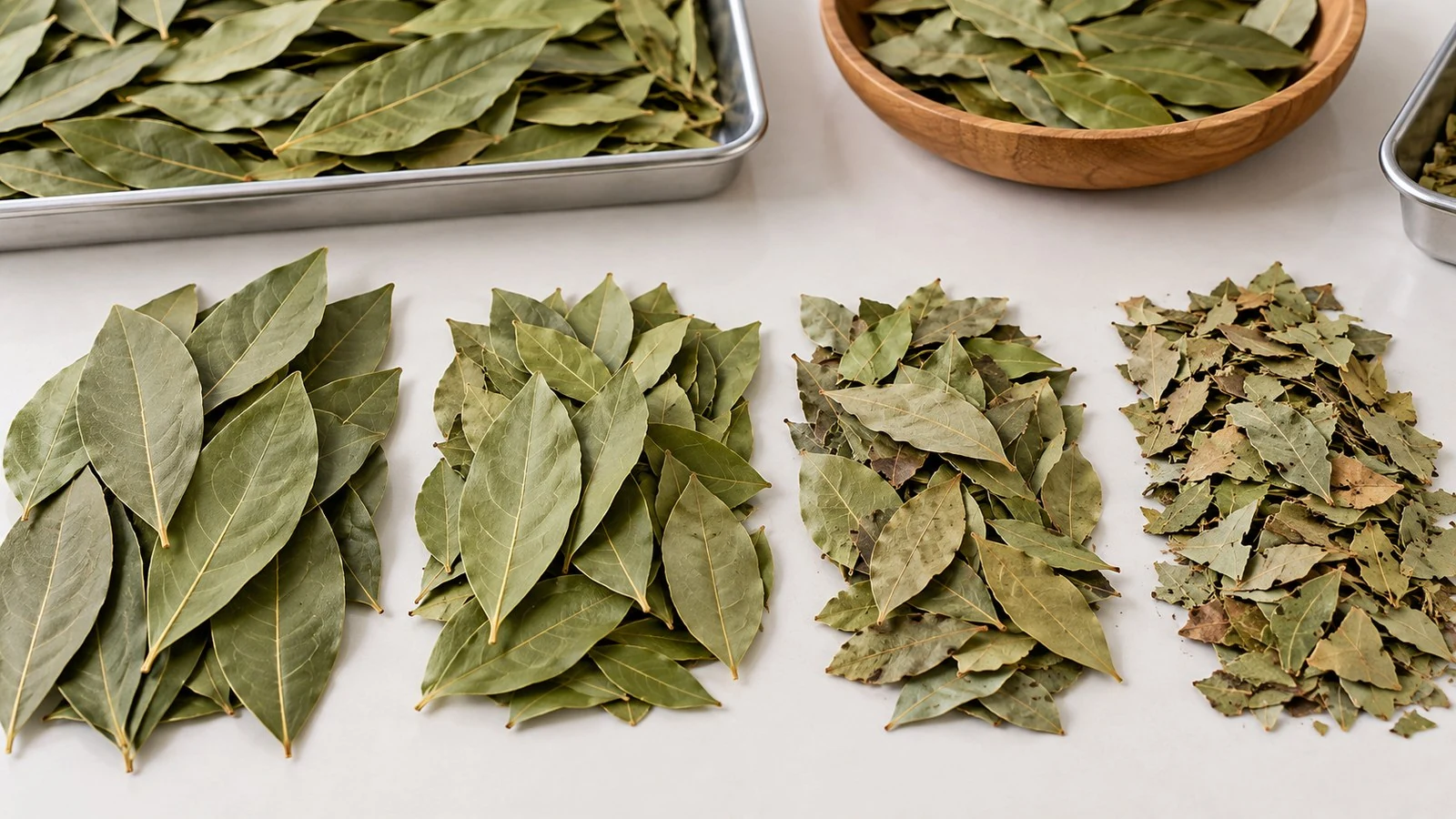
Bay leaves look simple until the first commercial specification arrives. Two offers can both say "Turkish bay leaves" while describing very different leaf sizes, color expectations, broken leaf limits, packing formats, and document requirements.
For importers, distributors, and private-label spice packers, the goal is not to chase the most decorative wording. The goal is to make the grade clear enough that procurement, quality, and warehouse teams all understand what will arrive.
Start with the use case
A grade should be matched to the buyer's use case:
- Retail jars and premium spice lines usually need better visual uniformity, cleaner whole leaves, and tighter sorting.
- Foodservice and bulk retail may accept more natural variation if aroma, cleanliness, and packing are consistent.
- Ingredient blending or industrial use may focus on aroma, moisture, and flow rather than perfect whole-leaf appearance.
Before asking for a price, define the channel, pack size, acceptable broken leaf ratio, target crop year, and destination market.
The quality points buyers should compare
Leaf color
Color is one of the first visible differences. A brighter green or green-brown appearance often supports premium presentation, while duller lots may still be suitable for bulk foodservice or processing. Buyers should ask for current-lot photos, not only catalogue images.
Moisture
Moisture affects handling, shelf stability, and carton condition. Bay Leaves Co. lists moisture targets by grade on the specification page, but final confirmation should be made per lot and per quote.
Broken leaf ratio
Whole leaves matter most when the product is visible to the final consumer. For blending and foodservice programs, a higher broken leaf allowance may be commercially acceptable. The important point is to agree the tolerance before shipment.
Foreign matter
Foreign matter limits should be stated plainly. This is one of the points where buyer and supplier language must be precise, because the receiving inspection usually treats it as a measurable quality factor.
Aroma and essential oil
Bay leaves are bought for flavor as well as appearance. Essential oil can be checked per lot when required, but buyers should avoid treating a generic number as a guarantee unless it is tied to a current lot document.
What to include in an RFQ
A good RFQ for Turkish bay leaves should include:
- Product form, such as whole dried bay leaves or crushed bay leaves.
- Grade target, such as hand-picked select, semi-select, standard, or industrial.
- Packing preference, such as 25 kg pressed bale, 50 kg pressed bale, or 10 kg carton.
- Destination country and delivery term request.
- Annual volume estimate and first order quantity.
- Required documents, such as COA, invoice, packing list, and any market-specific entry documents.
- Whether private-label or buyer-specific packing is needed.
Specification is not the same as certification
A product specification describes the agreed quality parameters. A certification claim is different and should be verified separately. Do not assume that a grade name automatically means organic, BRC, FDA, or any other certification status.
Bay Leaves Co. works on an RFQ basis. Certification and document scope should be confirmed for the actual product, supplier, facility, crop year, and destination.
Internal planning before samples
For repeat programs, it helps to prepare an internal comparison sheet. Include the intended shelf format, target price level, visual tolerance, document requirements, and expected annual volume. This gives the supplier enough context to recommend the correct grade instead of quoting the wrong material cheaply.
FAQ
Are all Turkish bay leaves the same grade?
No. Turkish bay leaves can be sorted into different commercial grades depending on appearance, cleanliness, broken leaf ratio, and intended channel.
Can a lower grade still be acceptable?
Yes, if the buyer's use case allows it. Industrial, blending, or foodservice applications may not need the same visual standard as retail jars.
Should buyers request current-lot photos?
Yes. Current-lot photos and documents are more useful than generic catalogue images when comparing commercial offers.
Does a grade name prove certification?
No. Certification status must be verified separately and tied to the relevant product, facility, lot, and destination requirement.
For product pages and RFQ details, see Turkish Bay Leaves, Quality and Specs, and Contact.